
Bhutan waives SDF for MICE Tourism: Benefits & Eligibility

Bhutan waives SDF as part of a transformative policy to attract global business events. The Himalayan kingdom, renowned for its Gross National Happiness philosophy, has eliminated the Sustainable Development Fee for MICE tourism. This initiative, announced by the Department of Tourism (DoT), removes fees for qualifying conferences, meetings, and exhibitions, positioning Bhutan as a competitive and culturally rich destination for international planners. Bhutan Waives SDF: Key Details Eligibility Requirements Group Size: Minimum 7 participants (excluding organizers, speakers, or hosts). Duration: Fee waiver applies for 4 nights per event (travel days excluded). Certified Partners: Events must be organized by DoT-approved Bhutanese tour operators or hotels. Expanded Scope Previously restricted to government functions, the Bhutan SDF waiver now covers all tourism-related MICE events, including corporate retreats, international summits, and incentive travel. Post-Event Compliance Submit a comprehensive report (with photos and outcomes) to the DoT within 30 days of departure. Participants extending their stay as tourists pay the standard SDF of $100 per day. Why Choose Bhutan for MICE Events? Cost Efficiency with the Bhutan waives SDF The Bhutan SDF waiver slashes operational costs for organizers, making high-value events more affordable. For example, a 4-night conference for 20 participants saves $8,000 in fees alone. Sustainability & Cultural Alignment Host events aligned with Bhutan’s carbon-neutral ethos and Gross National Happiness principles. Venues blend modern amenities with traditional architecture, such as Paro’s Uma Resort or Thimphu’s Taj Tashi. Unique Experiences Organize team-building hikes to Tiger’s Nest Monastery or mindfulness sessions with Buddhist monks. Showcase Bhutan’s UNESCO-listed festivals, like the Paro Tshechu, to international attendees. Proven Economic Impact In 2019, Bhutan welcomed 904 MICE travelers from key markets like Japan, India, and Germany, injecting revenue into local hotels, transport networks, and artisan communities. How to Apply for the Bhutan SDF Waiver Step 1: Partner with a Certified Operator Collaborate with a DoT-certified Bhutanese operator to design your event itinerary. Step 2: Submit Documentation Apply for the Bhutan SDF waiver at least 30 days before the event. Include participant lists, event schedules, and accommodation details. Step 3: Post-Event Reporting Share a detailed report highlighting: Event outcomes (e.g., partnerships, attendee feedback). Photos showcasing Bhutan’s venues and cultural activities. Economic Benefits of Bhutan’s SDF Waiver Policy Dorji Dhradhul, Director General of DoT, emphasizes that MICE tourism is a $700 billion global industry, and Bhutan aims to capture a larger share through its SDF waiver. Benefits include: Job Creation: Increased demand for local guides, chefs, and artisans. Infrastructure Growth: Upgrades to conference centers and eco-lodges. Cultural Exchange: Global attendees engage with Bhutanese traditions, boosting community pride. Case Study: A 2023 tech summit in Thimphu, organized under the Bhutan SDF waiver, partnered with local farmers to supply organic meals, directly supporting 15 rural households. FAQs: Bhutan SDF Waiver for MICE Events Q: Is the SDF waiver applicable to spouses or children? A: No. The Bhutan SDF waiver applies only to registered event participants. Q: Can we combine the waiver with tourist activities? A: Yes! Participants can extend their stay and explore Bhutan’s landmarks by paying the standard SDF post-event. Q: How long will the SDF waiver policy last? A: The waiver is currently open-ended but subject to periodic review by the DoT. Q: Are virtual/hybrid events eligible? A: No. The waiver applies only to in-person events held in Bhutan. Bhutan vs. Competitors: Why the SDF Waiver Matters Unlike conventional MICE hubs like Singapore or Dubai, Bhutan offers: Exclusivity: Limited annual tourist entries ensure uncrowded, intimate events. Sustainability Credentials: Bhutan is the world’s only carbon-negative country. Cost Savings: The Bhutan SDF waiver reduces fees by up to 40% compared to regional rivals. Plan Your Event: Next Steps Research Certified Partners: Explore the DoT’s official directory of approved operators. Design a Hybrid Itinerary: Mix conferences with cultural immersions (e.g., archery workshops, monastery tours). Leverage the SDF Waiver: Calculate your savings using the DoT’s SDF waiver calculator. Transform Business Events with Bhutan’s SDF Waiver The Bhutan SDF waiver is more than a financial incentive—it’s an invitation to host impactful events in a kingdom where sustainability and culture thrive. By reducing barriers and showcasing Bhutan’s unique offerings, this policy positions the country as a leader in ethical MICE tourism. Act Now: Partner with Bhutan’s certified experts to secure your waiver and create an unforgettable event with Bhutan Global Mindfulness & MICE
DHI to enter the MICE tourism space
The Druk Holdings and Investment (DHI) is entering the Meetings, Incentives, Conferences and Exhibition (MICE) tourism space in collaboration with an international company called G 9 Investments. The company formed is the Bhutan Global Mindfulness & MICE Holdings and Pvt Limited (BGMMH). This company is registered in Singapore through the DHI subsidiary office there and G 9. A DHI official said that right now the company is looking at building video content to showcase the Bhutanese way of life and for Bhutanese Mindfulness to go global and create a foot print in terms of global online content. The next stage is to organize MICE events in Bhutan to let the online mindfulness translate into physical mindfulness in Bhutan. The G 9 company is a fund that supports early stage companies that empower consumers to live, look and feel better. It has investments in Biotechnology, AI, IT, E-Commerce, Healthcare, Wellness, Fitness, Fashion companies. The DHI official said the initial goal is building online content as an internet production company. He said DHI will be investing in building a global presence and in a way branding the country. The aim is to create content that resonates globally and also caters to the huge mindfulness community online. It will also see what content can be curated and what content can sell. The content could be as simple as a simple walk in the forest with commentary or a virtual walk to Taktsang or a football match. G 9 brings forte in online marketing while DHI will be the majority owner of the company. In short it is about using the power of the online to leverage MICE tourism. When asked if tour operators will see this as competition from DHI in the tourism space the DHI official said DHI is not competing with tour operators and instead tour operators should see this as an opportunity as more tourists will come to Bhutan. He said it is also an opportunity as the company is building online video and also physical content and will have information on the economy, SDF, tourism etc. The online content will be based on whatever the global interest about Bhutan is which is about happiness or mindfulness and also have conferences here. The DHI said the tourists brought in through this initiative will help the local economy. The DHI official said that depending on what content resonates globally there can be physical MICE conferences held in Bhutan. The company has been registered around two months ago. It will also take the help of international online channels to distribute content. In the latest proposal, the Tourism Department is proposing to give 5 nights and 6 days for SDF free MICE tourism, not including the arrival and departure days. MICE tourism could not be implemented yet due to the absence of strong Standard Operating Procedures (SOP) and the need to enhance the immigration website to give the SDF free MICE tourism option. ( Source: Tenzin Lhamsang, The Bhutanese, 05/04/2024)
Crypto Payment System for Tourism (Binance) in Bhutan
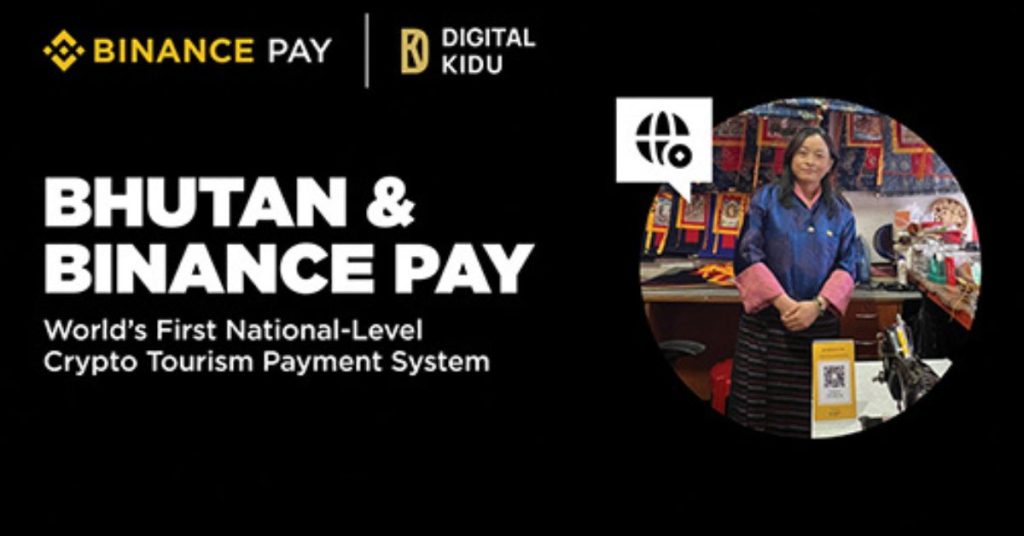
Bhutan’s Crypto Payment System for Tourism: Redefining Cashless Travel Bhutan, the Himalayan kingdom famed for prioritizing Gross National Happiness (GNH), has achieved another global milestone by launching the world’s first national crypto payment system for tourism. In collaboration with Binance Pay and DK Bank, Bhutan now enables travelers to use cryptocurrencies like BNB, BTC, and USDC for every aspect of their journey—from visas and flights to local shopping and monument fees. This bold initiative merges Bhutan’s commitment to sustainability with cutting-edge digital finance, setting a blueprint for the future of travel. How Bhutan’s Crypto Payment System Works for Travelers End-to-End Crypto Payments Flight Tickets & Visas: Book Drukair flights and pay the $100/day Sustainable Development Fee (SDF) using Binance Pay. Accommodation & Tours: Settle hotel bills, tour guides, and entry fees via static/dynamic QR codes at 100+ merchants. Local Experiences: Buy handicrafts from remote villages or fresh produce from roadside vendors—all in crypto. Zero Gas Fees & Instant Transactions Unlike traditional crypto transfers, Bhutan’s system charges 0 gas fees and processes payments instantly through Binance Pay. Secure & Flexible Supports 100+ cryptocurrencies (BNB, BTC, USDC, etc.). Encrypted transactions, 2FA, and real-time confirmations via the Binance app. Powered by DK Bank Bhutan’s first fully digital bank ensures seamless settlements for merchants, even in rural areas. Why Bhutan? Bridging Tradition with Crypto Innovation Gross National Happiness Meets Tech: Aligns with Bhutan’s GNH philosophy by fostering financial inclusion and empowering local communities. Sustainability Focus: Reduces reliance on cash, lowering environmental impact and supporting carbon-neutral tourism. Cultural Preservation: Enables small vendors in remote areas (e.g., Punakha Valley) to participate in the digital economy while preserving traditions. Richard Teng, CEO of Binance: “This partnership isn’t just about crypto payments—it’s about bridging cultures and economies. Bhutan’s model shows how digital finance can enrich travel experiences globally.” Benefits of Bhutan’s Crypto Tourism Model For Travelers: Seamless Experience: Pay for everything via QR codes—no currency exchanges or cash withdrawals. Cost Savings: Avoid foreign transaction fees and banking charges. Security: Encrypted transactions and instant confirmations. For Merchants & Communities: Financial Inclusion: Rural vendors can now accept digital payments, expanding their customer base. Prompt Settlements: DK Bank ensures real-time fund transfers to merchants. Global Reach: Attract tech-savvy travelers from Binance’s 270M+ user base. How to Use Crypto Payments in Bhutan Set Up Binance Pay: Download the Binance app, verify your account, and fund your wallet with supported cryptocurrencies. Scan & Pay: Use QR codes at partnered hotels, airlines, and shops. Example: Book a Tour: Scan a code at a Thimphu travel agency. Buy Souvenirs: Pay a Paro street vendor in BTC. Track Transactions: Receive real-time notifications via the Binance app for every payment. Bhutan vs. Traditional Tourism Hubs: A Crypto Advantage While destinations like Dubai or Singapore explore crypto payments, Bhutan’s nationwide crypto payment system for tourism stands out due to: Full Integration: From immigration (SDF/visa fees) to mom-and-pop stores. Zero Fees: Eliminates gas and foreign transaction costs. Cultural Alignment: Tech enhances—not replaces—Bhutan’s heritage. Damcho Rinzin, Director of Bhutan’s Department of Tourism: “This isn’t just a payment solution—it’s about empowering every citizen, from Thimphu hotels to Phobjikha farmers, to thrive in the digital age.” FAQs: Bhutan’s Crypto Payment System for Tourism Q: Which cryptocurrencies are accepted? A: Over 100, including BNB, BTC, ETH, and USDC. Q: Are there transaction limits? A: No—pay for a 5,000hotelstayora5,000hotelstayora2 cup of butter tea. Q: Is this system available to all tourists? A: Yes! Anyone with a Binance account can use it. Q: How does DK Bank support rural vendors? A: DK Bank provides QR code systems and instant settlements, even without internet access. The Future of Travel: Bhutan’s Vision Bhutan’s crypto payment system for tourism is more than a convenience—it’s a blueprint for ethical, tech-driven travel. By 2025, the kingdom aims to: Expand crypto acceptance to 500+ merchants. Integrate NFT-based travel passes for cultural sites. Pilot blockchain-powered carbon offset programs. Embrace the Crypto Travel Revolution Bhutan’s partnership with Binance Pay and DK Bank redefines what’s possible in tourism. For travelers, it means frictionless, secure journeys. For Bhutan, it’s a step toward inclusive, sustainable growth rooted in GNH. Ready to Explore Bhutan with Crypto? Download Binance Pay, plan your itinerary, and experience the world’s first cashless Himalayan adventure. Plan your event/conferences in Bhutan with Bhutan Global Mindfulness & BGMM
GMC unveils landmark law to drive global innovations
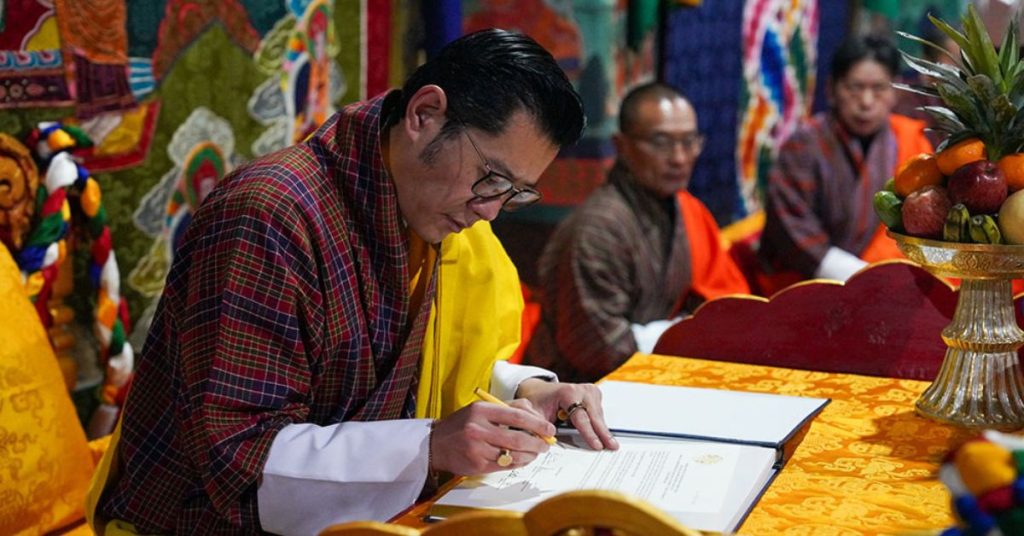
Punakha—In a historic step to position Bhutan as a global leader in mindfulness, sustainability, and innovation, the Gelephu Mindfulness City Authority (GMCA) yesterday unveiled the “GMC Law No. 1 of 2024”, also known as the Application of Laws Act 2024, at the sacred Machhen Lhakhang of Punakha Dzong. His Majesty the King, Executive Chairperson of the Gelephu Mindfulness City Board, granted the “GMC Law No. 1 of 2024”. This transformative legislation, sanctioned by the royal assent of His Majesty the King, represents a pivotal milestone in establishing the Gelephu Mindfulness City (GMC) as a global hub for holistic development. The Prime Minister, the Chief Justice, the Chairperson of the Anti-Corruption Commission, and the Auditor General, alongside the GMC Governor Dasho, GMC Board Member Dasho Arun Kapur, GIDC CEO Ujwal Dahal, and other officials from the GMC attended the ceremony. The “GMC Law No. 1 of 2024” provides a governance framework for the Gelephu Mindfulness City Special Administrative Region (GMC SAR), reinforcing its autonomy and capacity to attract global investment and drive economic growth. This legislation follows the granting of the GMC Royal Charter on 10 February 2024, which laid the foundation for the SAR’s innovative and sustainable development. A standout feature of the GMC Law is the integration of Singapore’s common law and Abu Dhabi Global Market (ADGM) regulations. This unique combination governs key areas such as company incorporation, employment, taxation, and financial services, ensuring streamlined legal processes for businesses and individuals. By adopting globally recognised legal frameworks, GMC offers a stable and efficient regulatory environment, making it an attractive destination for international investors and entrepreneurs. At the heart of GMC’s mission is the alignment of modern innovation with Bhutan’s rich cultural values and abundant green energy. The city aims to create a model urban environment that exemplifies mindfulness, sustainability, and technological advancement. Leveraging the Kingdom’s renewable energy resources, GMC is poised to become a beacon for eco-conscious economic development, fostering industries that align with its holistic ethos. The enactment of GMC Law No. 1 marks the beginning of a phased approach to development. In Phase 1, the focus is on establishing business regulations and legal processes to ensure safe, compliant operations. The framework also includes provisions for civil and criminal laws to promote law-abiding behaviour among residents and businesses. As the city expands, Phase 2 will introduce a tailored legal code, incorporating arbitration and specialised legal areas. These advancements will be developed in close collaboration with the business community, ensuring the laws meet the region’s evolving needs while maintaining a high standard of governance. The GMC SAR is a pioneering initiative in urban development, blending traditional Bhutanese values with cutting-edge design and technology. By integrating a globally accepted legal framework and sustainable practices, GMC sets the stage for an economic and cultural renaissance in the southern plains of Bhutan. This visionary project is not just about economic growth but also about creating an environment where mindfulness and sustainability become central to urban life. With its innovative approach, GMC is poised to inspire similar initiatives worldwide, solidifying Bhutan’s reputation as a leader in holistic development. (Source: Chencho Dema, Kuensel, December 27, 2024)
Bhutan Airlines to launch direct flights to Hong Kong

Starting January 27 next year, Bhutan Airlines will introduce direct flights between Paro and Hong Kong, offering travellers a faster and time-efficient route. This new route will save travellers three to four hours of transit time compared to the current options, which require layovers in Kathmandu, Nepal, or Bangkok, Thailand. Building on its successful launch of fixed-departure flights to Vietnam and Malaysia, Bhutan Airlines is expanding its international network with Hong Kong as its latest destination. According to Bhutan Airlines officials, 16 fixed-departure flights will be scheduled annually between Paro and Hong Kong, strategically timed to coincide with peak travel seasons. Ticket prices are set at Nu 81,100 (USD 960) for economy class and Nu 105,000 (USD 1,250) for business class. One traveller expressed that this initiative would significantly reduce travel time, as current routes often involve 8 to 9 hours of transit time. The CEO of Bhutan Airlines, Pema N. Nadik, said that this new route will offer travellers a unique opportunity to experience the pristine beauty of Bhutan, its rich cultural heritage, and its commitment to sustainable tourism. As holiday seasons are a popular time for travellers, Bhutan Airline has designed schedules with that in mind, offering Hongkongers an opportunity to explore Bhutan, one of Asia’s unique destinations, said the CEO. The Chairperson of the Travel Industry Council of Hong Kong, Gianna Hsu said that Bhutan has become one of the most sought-after destinations among travellers in Hong Kong. “We hope this marks the beginning of regular, year-round flights connecting our two regions,” she added. Currently, Bhutan Airlines operates weekly flights connecting Bangkok to Paro via Kolkata, India, and six flights a week on its Kathmandu route, excluding Fridays. Source: Sherab Lhamo, Kuensel ( December 4 2024)
Fixed departure launched to Malaysia – Bhutan
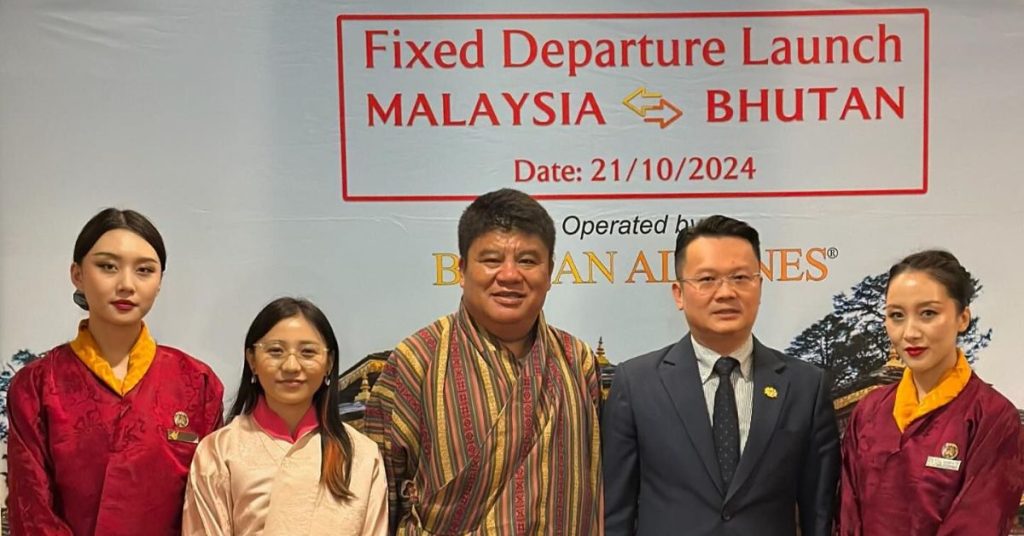
Bhutan will soon have flights to Malaysia. Bhutan Airlines launched fixed departure flights connecting Malaysia and Bhutan. The launch was announced yesterday in Kuala Lumpur.The first flight is scheduled for 20th December later this year.In a news release, the airline stated that this will facilitate travel between Bhutan and Malaysia allowing more people to experience Bhutan’s beauty and cultural heritage.This announcement follows the airline’s launch of fixed departure flights to Vietnam starting January next year and the launch and operations of fixed departure flights to Mumbai and Bengaluru in India earlier this year. (Source: BBS, October 22, 2024)
Meet GMC’s new CEO, Governor and the Board

In a significant move, His Majesty The King on 1st October 2024 appointed Mun Leong Liew as CEO to lead the groundbreaking Gelephu Mindfulness City (GMC) in the Kingdom’s Special Administrative Region. His Majesty, Chairman of the Board of Directors (BOD) of the Mindfulness City, concurrently appointed Liew to the BOD alongside Joichi “Joi” Ito, Yee Ean Pang, Seow Hiang Lee, Arun Kapur and Lauren Chung. His Majesty also named Ito as Chairman of the Gelephu Investment Development Corporation (GIDC). With decades of global experience, these leaders in their fields will work with Bhutanese peers and international partners to establish GMC as a beacon of mindful development, blending cutting-edge infrastructure with Bhutanese values to drive sustainable, transformative growth. Announced by His Majesty in December 2023, Gelephu Mindfulness City is a global economic hub designed to reframe core principles of economic and social development. CEO Mun Leong Liew will lead the charge based on his extensive experience at the helm of international investment and development projects. He has a solid track record in urbanisation, infrastructure and airport development garnered planning and executing groundbreaking projects across global markets in leadership roles with CapitaLand, Changi Airport and Surbana Jurong Group. As founding president and CEO of CapitaLand Group, he grew the publicly listed company to a USD 12 billion market capitalisation and expanded its footprint to more than 20 countries, making it Southeast Asia’s largest real estate group. His leadership at Changi Airport Group saw the creation of the globally recognised Jewel Changi Airport, among other developments. This positions Liew well to steer GMC’s strategic vision, infrastructure projects and global investments. A core focus of his mandate will be capacity building, developing Bhutanese talent in preparation for future leadership succession of the Gelephu Mindfulness City team. Commenting on his appointment, Liew said, “I am deeply honoured to be entrusted with this leadership role and thrilled to build the team that will bring Gelephu Mindfulness City to life. This project will redefine sustainable urban living, and I am eager to collaborate with a diverse team of bright, passionate professionals to realise His Majesty’s vision. Together, we will create a truly unique city that embodies Bhutanese values while shaping the future of mindful economic growth.” Chairman of GIDC and Board Director Joichi “Joi” Ito Joichi “Joi” Ito has concurrently taken the role of Chairman of the Gelephu Investment Development Corporation (GIDC). Itowill work with Bhutanese and international peers to facilitate investment and economic growth and development for enterprises in Gelephu Mindfulness City SAR, other areas of Bhutan and globally. This will include working to enhance digital connectivity for the Mindfulness City and the Kingdom and driving investment in green energy sources such as hydropower and solar. At the same time, GIDC will foster the establishment and growth of technology industries to utilise carbon-free power, including data centres and artificial intelligence (AI) companies. Ito is uniquely qualified for this mandate based on extensive technology sector experience. His current role as President of Chiba Institute of Technology and previous position as Director of the Media Lab at the Massachusetts Institute of Technology (MIT) put him at the forefront of research & development in areas such as green energy, AI, web3 and Blockchain. Similarly, his work with The Digital Society Council of the Digital Agency of Japan and international organisations such as The Mozilla Foundation and The Electronic Privacy Information Center (EPIC)means that he brings a broad network of relationships with him. Ito commented on his appointment, saying, “Gelephu Mindfulness City and the Kingdom of Bhutan are trailblazers in environmentally responsible and mindful development based on abundant green energy sources; entrepreneurs pushing boundaries in areas such as AI, blockchain and drone development; and commitment to harnessing technology to improve the human condition.” Board Director Yee Ean Pang Yee Ean Pangjoins the BOD with a strong investment track record in greenfield and infrastructure development across Asia, with a USD 6 billion portfolio, a significant portion of which is dedicated to renewable energy. He is currently focused on social sustainability investments. As the founder and director of Urbina Capital, former CEO of Surbana Jurong Capital and Director General of Operations at the Asian Infrastructure Investment Bank, his expertise will guide Gelephu’s alignment with triple sustainability investment strategies, working to ensure economically, socially and environmentally responsible development. Board Director Seow Hiang Lee Seow Hiang Lee, former CEO of Changi Airport Group, brings unmatched insights into urban development and international connectivity to the BOD. Having overseen the rise of Changi Airport to global prominence – the transportation hub has been named the World’s Best Airport multiple times – his deep understanding of the interplay between government and the private sector in the pursuit of infrastructure development and economic growth will be pivotal in ensuring Gelephu Mindfulness City’s competitiveness as a regional economic hub. Board Director Arun Kapur Arun Kapur, who led the establishment of the Druk Gyalpo’s Institute (DGI) at Paro, Bhutan, contributes deep understanding of training and education systems to the BOD. He will play a key role in upskilling Bhutanese talent to take leading roles in private and public institutions in the Mindfulness City. Prior to his work with DGI, Kapur held leadership positions with some of the highest ranked schools across India, including as Principal of The British School and Headmaster of the Vasant Valley School, both in New Delhi, and as Executive Director of Learn Today, headquartered in New Delhi. Board Director Lauren Chung Lauren Chung, Asia Pacific CEO of Teneo, the global CEO advisory firm, brings significant expertise in international relations and communications strategy to the BOD. Lauren is a trusted advisor to corporate boards, CEOs, investors, governments and civil society leaders, helping them achieve strategic goals while navigating high-stakes economic, geo-strategic, regulatory, media, social, technological and environmental change. She will provide guidance on the necessary communications infrastructure and skills development to support the City’s global stakeholder engagement. The new appointees attended the opening session of the Bhutan Innovation, where Bjarke Ingels, founding partner & creative director of Bjarke Ingels Group (BIG), presented the concept masterplan for GMC. Together, these development, technology and education pioneers will
GMC to adopt Singaporean law
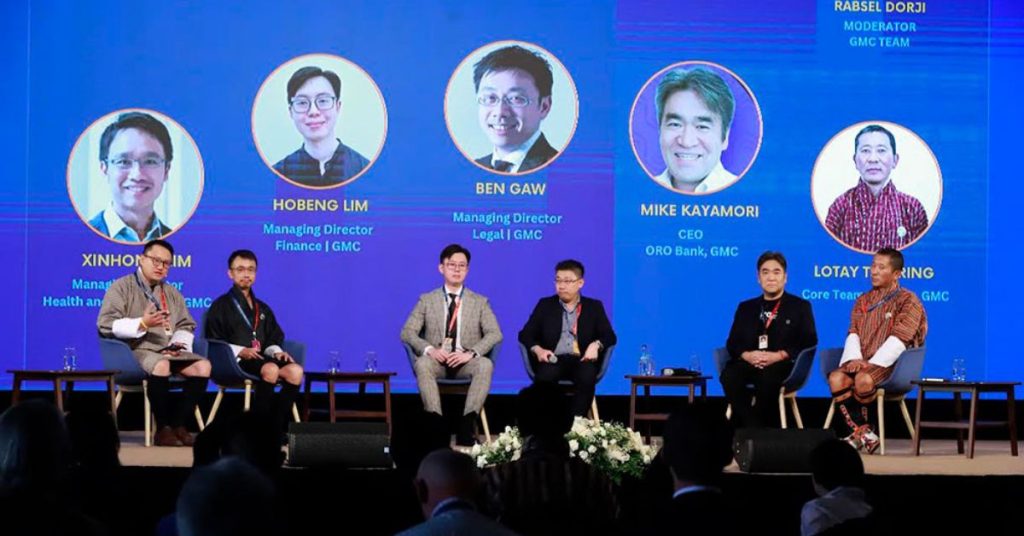
The Gelephu Mindfulness City (GMC) will adopt Singaporean law as its primary legal framework to build a strong foundation for governing various sectors in the Special Administrative Region (SAR) envisioned by His Majesty the King. The managing director of legal affairs of GMC, Ben Gaw, said that while the core legal structure will draw from Singaporean law, the GMC will also integrate international best practices to create a comprehensive system. As a new city, the GMC aims to foster business growth while ensuring solid legal processes. Ben Gaw said that creating entirely new laws could lead to public confusion, and since Singaporean law is globally recognised framework, it is a more accessible choice for residents and businesses. “Many countries have adopted these laws, which will make GMC a secure place for businesses,” he said, highlighting the importance of a strong legal foundation. In Phase 1, the focus will be on business regulations and legal processes to ensure safe and compliant operations. Civil and criminal laws will also be established to promote law-abiding behaviour among residents and businesses. As GMC expands, Phase 2 will introduce a tailored legal code, including arbitration and specialised areas, developed in consultation with the business community. He added that the legal framework must align with societal aspirations, ensuring that laws meet the needs of the populace while promoting economic growth. As a business hub, GMC will also prioritise eco-friendly regulations, including tax, customs, and duties, to create a sustainable environment for businesses and residents. Former Prime Minister Dasho Dr Lotay Tshering, a core member of the GMC project, pointed out that while Gelephu has the authority to create its own regulations, leveraging proven frameworks from other nations will save time and simplify the process. “We don’t need to waste time explaining the rules since they are already in practice elsewhere,” he explained. However, he acknowledged that the legal framework will evolve to meet the city’s changing needs over time. GMC aims to create a modern, flexible legal system that fosters innovation and growth, ensuring that the city thrives as a business and innovation hub. (Source: KP Sharma, Kuensel, October 2nd, 2024)
Bhutan Innovation Forum

The Inaugural Bhutan Innovation Forum is set to be held at Dungkar Dzong in Pangbisa from 1-3 October, 2024. It will bring together the world’s most eminent thought-leaders, innovators, entrepreneurs, artists, philosophers, scientists, philanthropists, and investors to build pathways for impact in Bhutan. Guided by a shared commitment to mindfulness, innovation, entrepreneurship and sustainability, the Forum will serve as an incubator of innovations in digital technology, ecology and environment, education, health, urban planning, economic transformation and aesthetic appreciation in Bhutan and beyond. Featuring more than 70 renowned international speakers, including Evan Spiegel, CEO of Snap Inc., the company responsible for Snapchat, Nobel Prize-winning economist Joseph Stiglitz, leading climate economist Lord Nicholas Stern, Nobel Laureate scientist Rich Roberts, Nobel laureate economist Mike Spence, Chair of Global Research at J.P. Morgan & Chase Joyce Chang, philosopher and Buddhist monk Matthieu Ricard, and architect Bjarke Ingels, the Forum is expected to attract participants from all around the world. Evan Spiegel said that he is honored to attend the inaugural Innovation Forum in Bhutan, inspired by King Jigme’s vision for supporting the country’s next generation of entrepreneurs and innovators. “I look forward to discussing how mindfulness helps to create the opportunity for innovation, and the supportive role that technology can play“, he said. The Forum will center around Gelephu Mindfulness City and invite attendees to reflect, design and deliberate upon how to build mindful and innovative cities. Gelephu Mindfulness City was announced by His Majesty The King on National Day in 2023, who described it as “one-of-a-kind, anchored on the vision and values of GNH.” His Majesty said that the new city to be built in Gelephu will be “a Mindfulness City, encompassing conscious and sustainable businesses, inspired by Buddhist spiritual heritage, and distinguished by the uniqueness of the Bhutanese identity.” Bhutan offers Gelephu Mindfulness City as a Special Administrative Region, envisioned as a knowledge economy that balances sustainability and well-being with prosperity, and an incubator for excellence in art, innovation, and entrepreneurship. The City is also intended to be an economic hub that would propel the rest of Bhutan and the entire South Asian region toward greater progress and prosperity. Joseph Stiglitz noted that the Bhutan Innovation Forum has the potential to transform the society’s most important kind of “endowment”—our collective learning capabilities. “The Bhutan Innovation Forum will set the dynamics for building human capital and creating a learning society while upholding its commitments to mindfulness and societal well-being,” he said. Information on the Forum and registration for interested participants can be found on the event website (www.bhutan-innovation-forum.org). (Source: DHI, July 3 2024)
64,941 tourists arrive in first five months
Bhutan welcomed 23,547 visitors in May 2024, marking the highest monthly arrivals since reopening after the pandemic. From January 1 to May 31, 2024, Bhutan received a total of 64,941 guests, a significant increase compared to the 43,074 visitors during the same period in 2023. In May 2023, the country saw 16,609 arrivals. The estimated SDF revenue collected between January and May 2024 is approximately USD 16.25 million. A release from the Tourism Department says the breakdown of the 2024 visitor arrivals shows that 66% originated from India, while the remaining 34% came from the US, China, the UK, Germany, Singapore, France, Italy, Malaysia, Vietnam, Thailand, Australia, and Canada. Excluding Indian arrivals, other international visitor arrivals reached 21,507 this year, compared to 11,259 during the same period in 2023. There were more international arrivals in May 2024 than there were in May 2019. Indian arrivals totalled 43,434 in 2024, up from 31,815 last year. Some source markets, including the USA, Malaysia, Spain, and Singapore, have exceeded or are very close to pre-pandemic levels. Overall, international arrivals (excluding Indian visitors, who were exempt from SDF at the time) are at 78% of the levels seen during the same period in 2019. Over the past three months, there has been a noticeable increase in guests arriving from Singapore, Malaysia, Thailand, China, Australia, Canada, Italy, Taiwan, Indonesia, Russia, Spain, Japan, Israel and Philippines. Bhutan’s Department of Immigration has confirmed that the data mentioned above includes only guests entering Bhutan as tourists, and not those in any other category Source: The Bhutanese, June 8